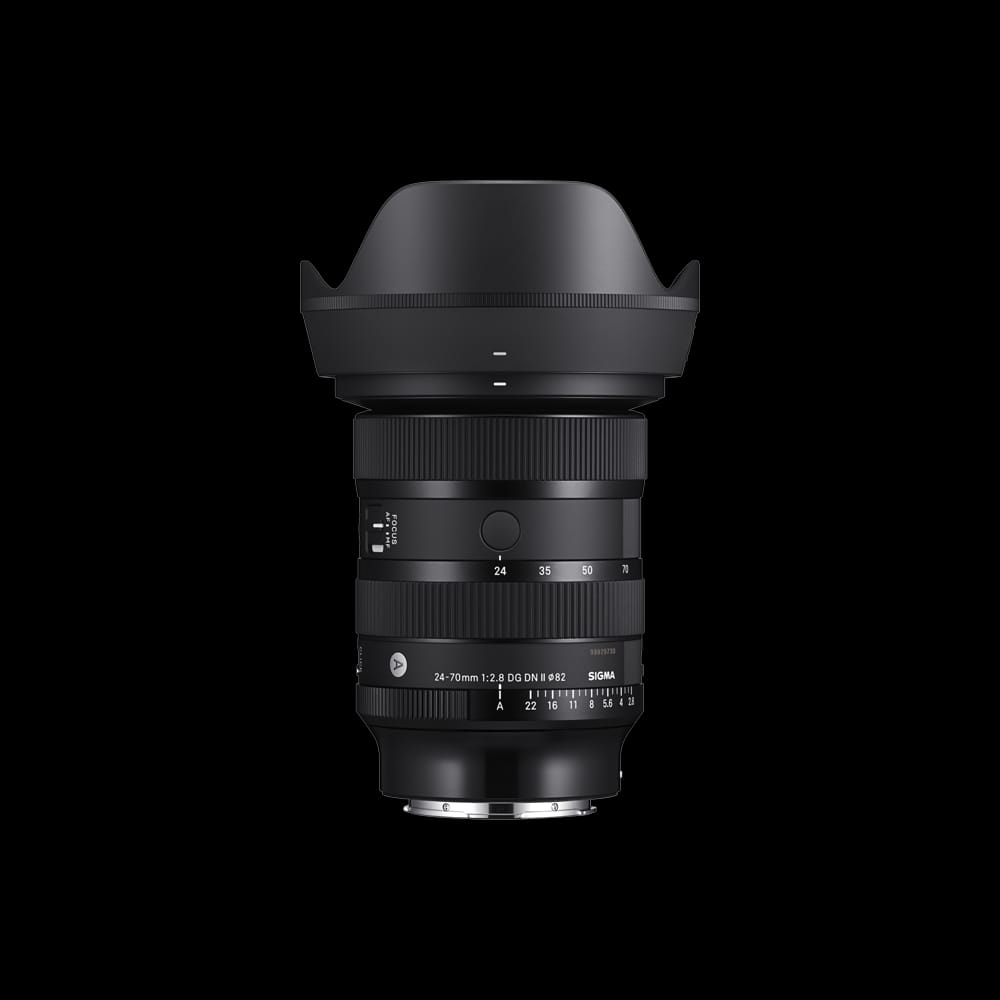
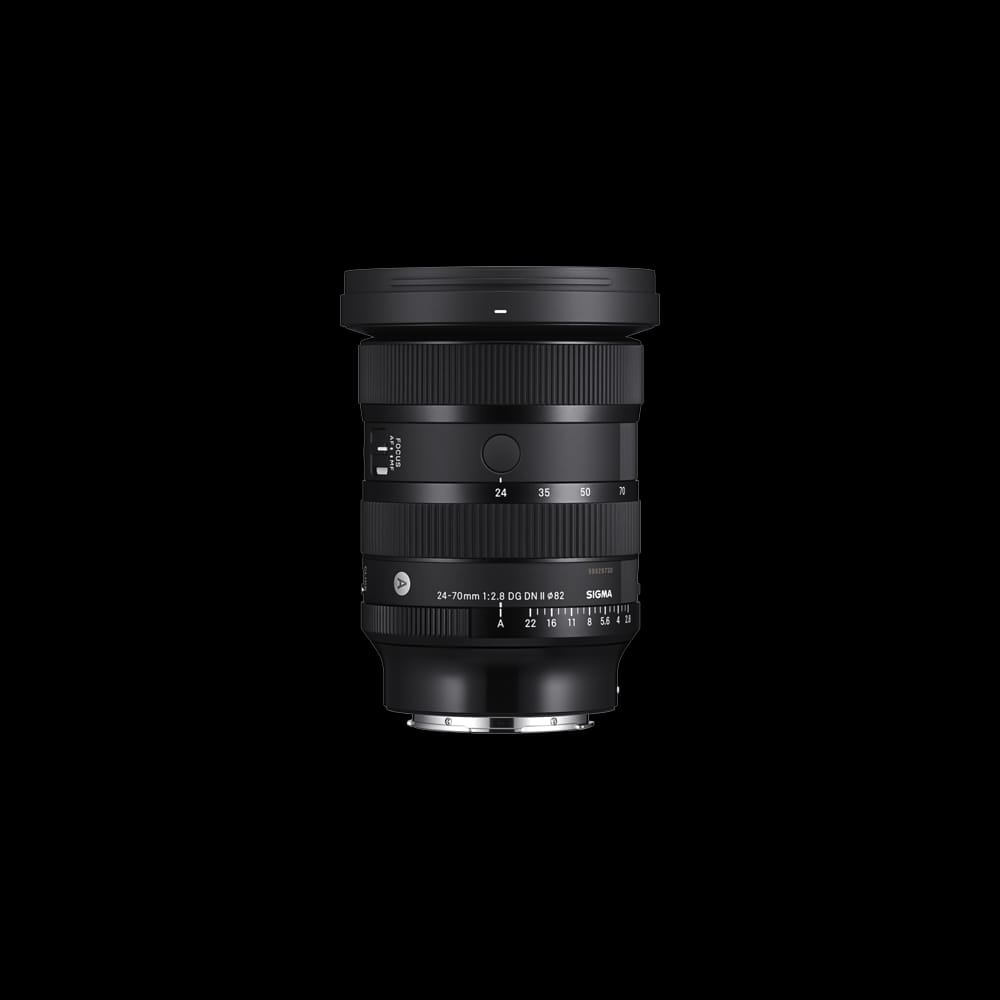
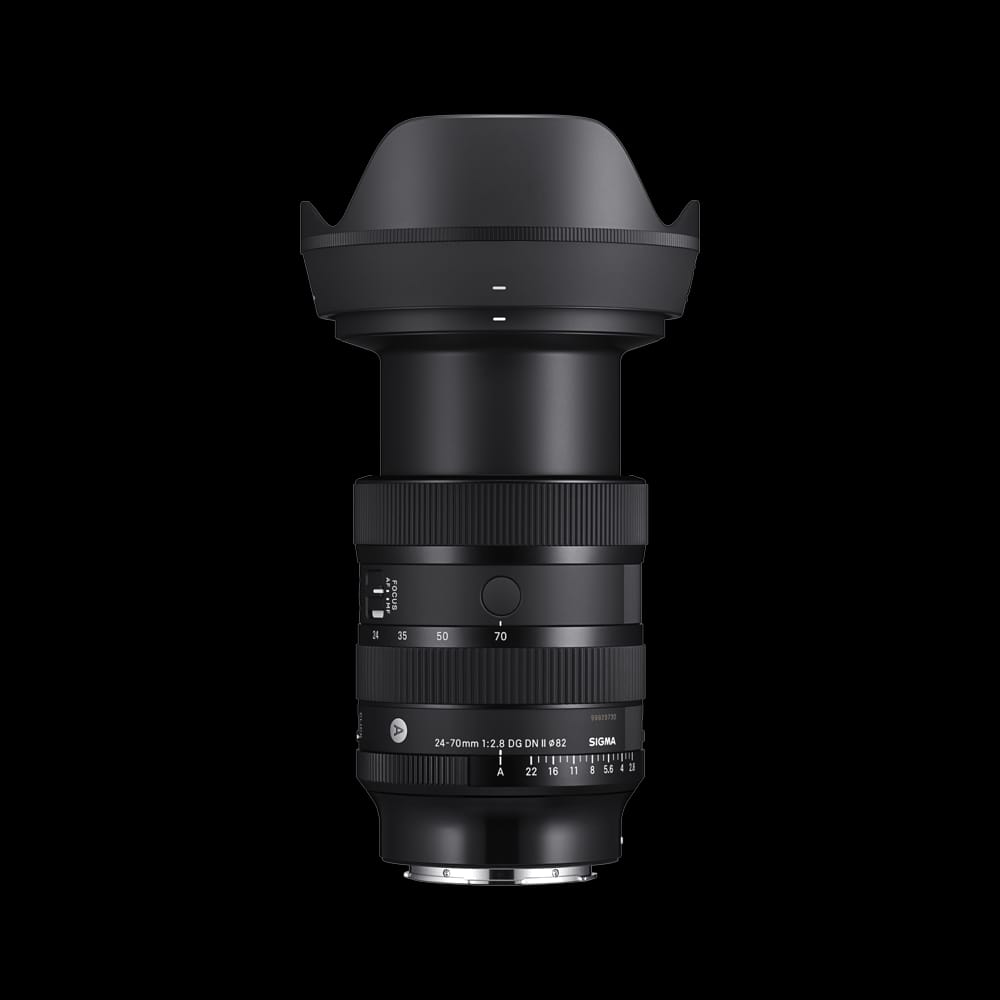
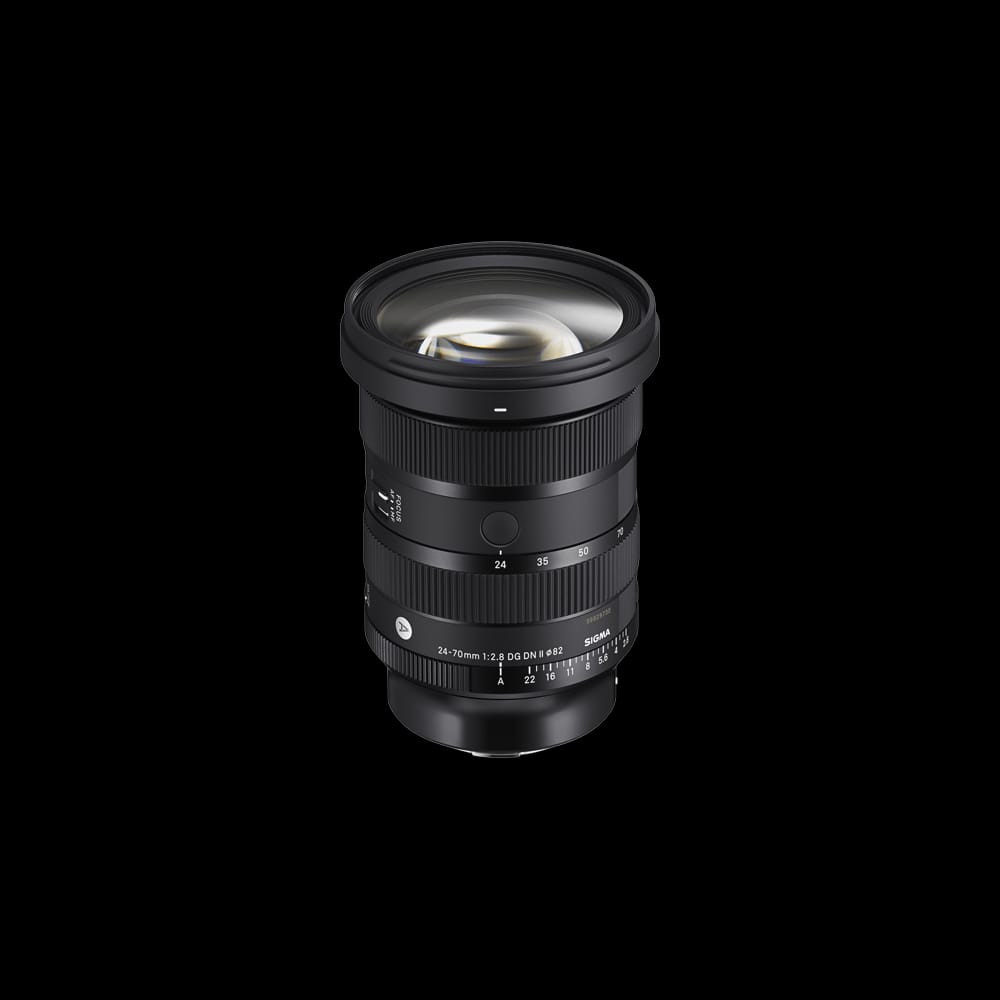
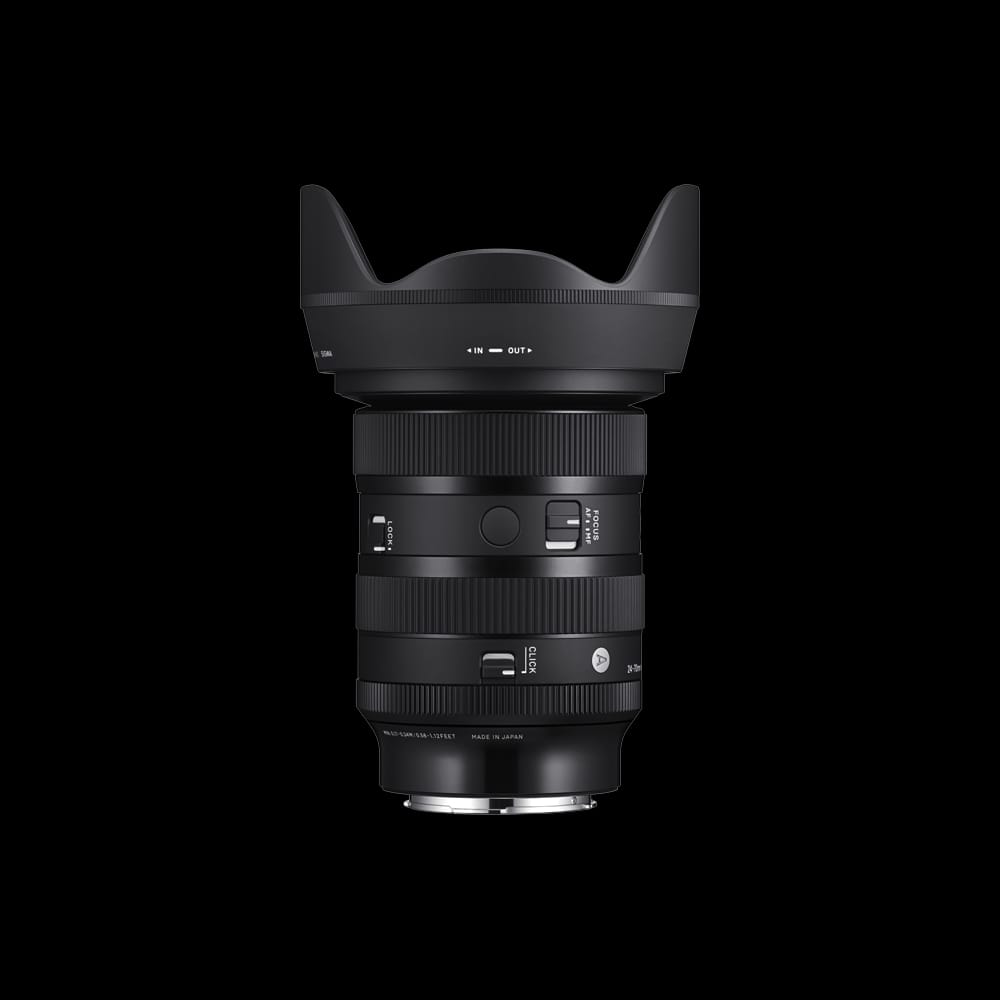
Q: What mounts and camera bodies is this lens compatible with?
A: The lens is available in Sony E-mount and Leica L-mount versions.
If you use a Sony mirrorless full-frame body (or compatible crop-sensor body that supports FE lenses), the Sony E mount version will fit — no adapter required.
Q: Is this lens full-frame? Can it be used on APS-C bodies too?
A: Yes — the lens is designed for full-frame sensors (“DG” / “35 mm full-frame coverage”)
It can also be mounted on APS-C Sony bodies (though field of view will be cropped). That said, to get the intended 24–70 mm range (wide–to–standard zoom), full-frame bodies are ideal.
Q: What is the minimum focusing distance and its close-up/macro potential?
A: Minimum focus distance is 17 cm (0.17 m) at the wide end and 34 cm at the tele end.
Max magnification ratio is ~ 1:2.7 (wide end) — not true macro, but good for close-ups, detail shots or semi-macro style shots.
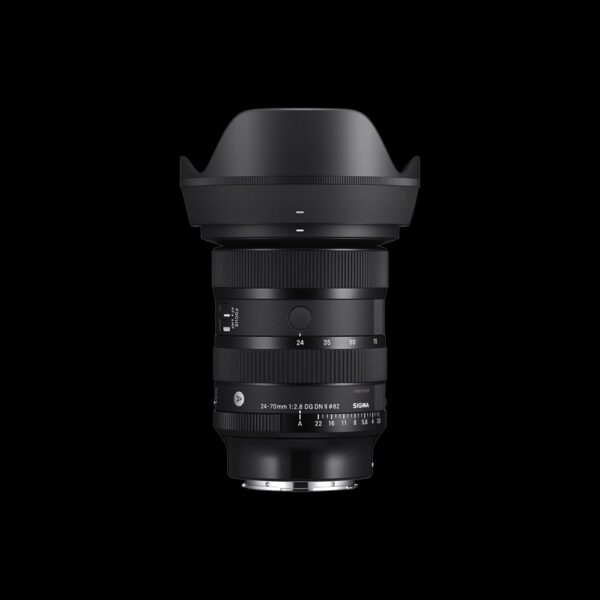
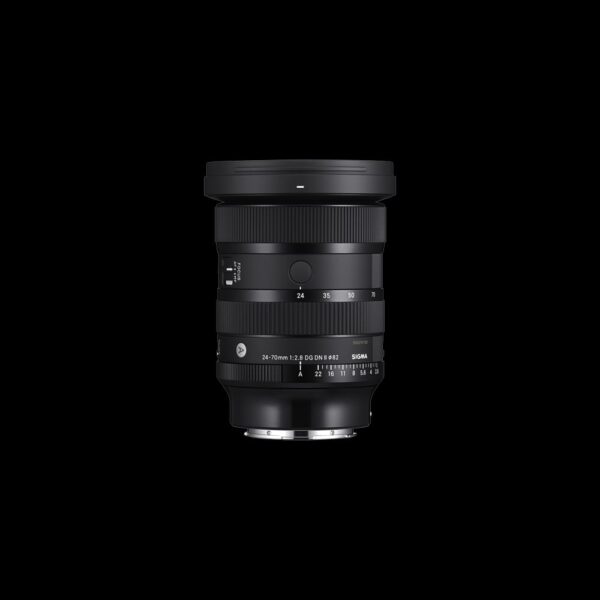
🟡 Note: If you shoot very close, be careful the front element or hood doesn’t hit the subject. For very close subjects you may have to remove the hood.
Q: Does the lens have image stabilization (IS)?
A: No — the lens does not include optical image stabilization (OIS).
You’d need to rely on your camera body’s in-body stabilization (IBIS, if available) or use faster shutter speeds / tripod for low-light or handheld shooting.
Q: Is the lens suitable for video work (e.g. minimal focus breathing, smooth aperture changes)?
A: Yes — the lens is designed to minimize focus breathing, which helps maintain a stable angle-of-view during focusing, making it friendly for video.
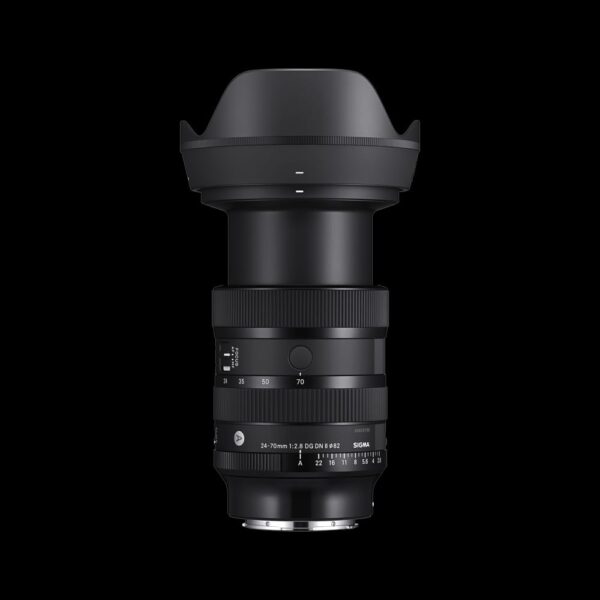
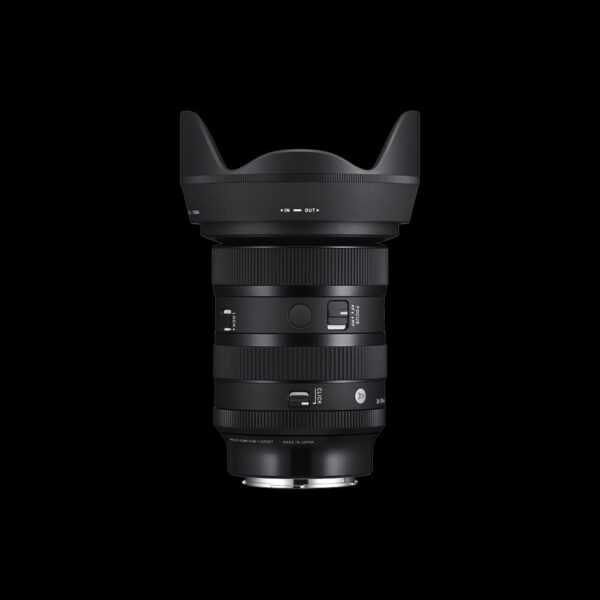
Also features like aperture ring (with click/lock switch), quiet & fast autofocus via linear motor (HLA), and smooth bokeh from 11-blade diaphragm make it versatile for hybrid photo + video work.
Q: How is build quality — is it weather-sealed or robust enough for outdoor use?
A: The lens has a dust- and splash-resistant structure and a water/oil-repellent coating on the front element.
⚠️ But it is not waterproof — avoid submerging or exposing it to heavy rain.
The mechanical build is solid (metal parts on zoom extension unit, robust mount, etc.), making it suitable for professional use and demanding environments.
Q: What’s new in this “Mark II / DG DN II” version compared to previous version?
A: Compared to the previous version (DG DN / Mark I):
-
It’s ~ 7% smaller and ~ 10% lighter, making it more portable.
-
Uses an updated autofocus motor (HLA) — AF drive speed more than 3× faster than previous model
-
Adds useful handling features: an aperture ring with click/lock, two programmable AFL buttons, and a zoom-lock switch.
-
Optical improvements: high resolution across the zoom range, better aberration correction, minimized flare/ghosting, and better close-up performance.
Q: What kind of photography is this lens good for? What are its strengths / limitations?
A (Strengths):
-
Great all-rounder zoom for portraits, events, wedding shoots, street photography, travel, landscapes (standard zoom). The fast f/2.8 helps in low light and background separation / bokeh.
-
Works well for close-up or detail shots due to short minimum focus distance and good magnification.
-
Good for video + hybrid shooting thanks to minimal focus breathing, smooth aperture control, and dependable autofocus.
-
Durable build and weather-resistance — useful for outdoor / travel / rough use.
A (Limitations / What to Watch Out For):
-
No built-in stabilization — handheld low-light shooting needs IBIS, tripod or high shutter speeds.
-
At extremely close distances (especially at wide end) you must be careful about the front element or hood hitting the subject (remove hood if necessary).
-
While excellent for many situations, for ultra-wide landscapes or specialized genres (e.g. true macro, wildlife, long tele) you may need additional lenses.

 Free Shipping
 24/7 Support
 Quality Guarantee